

Designing the Invisible: Fostering Psychological Safety in Virtual Lab Spaces
In today’s fast-moving digital world, virtual labs have become a go-to tool for schools, businesses, and researchers alike. While these remote spaces make collaboration easier, they also bring a few challenges, one of the biggest being how to create a

From Sterile to Immersive: Why Virtual Reality Is the Next Frontier for Scientific Training
If your lab training still depends on binders, videos, and sporadic hands-on time, you’re not alone. Many programs struggle to give learners meaningful practice without risking safety, consuming costly reagents, or tying up scarce equipment. Virtual reality (VR) changes that

Revolutionize Medical Training with 3D Anatomy Software
Medical students have relied on 2D textbooks for years during their training. Learning about human anatomy has always been one of the toughest parts. However, with evolving technology, medical training has taken a significant leap forward. Do you know what
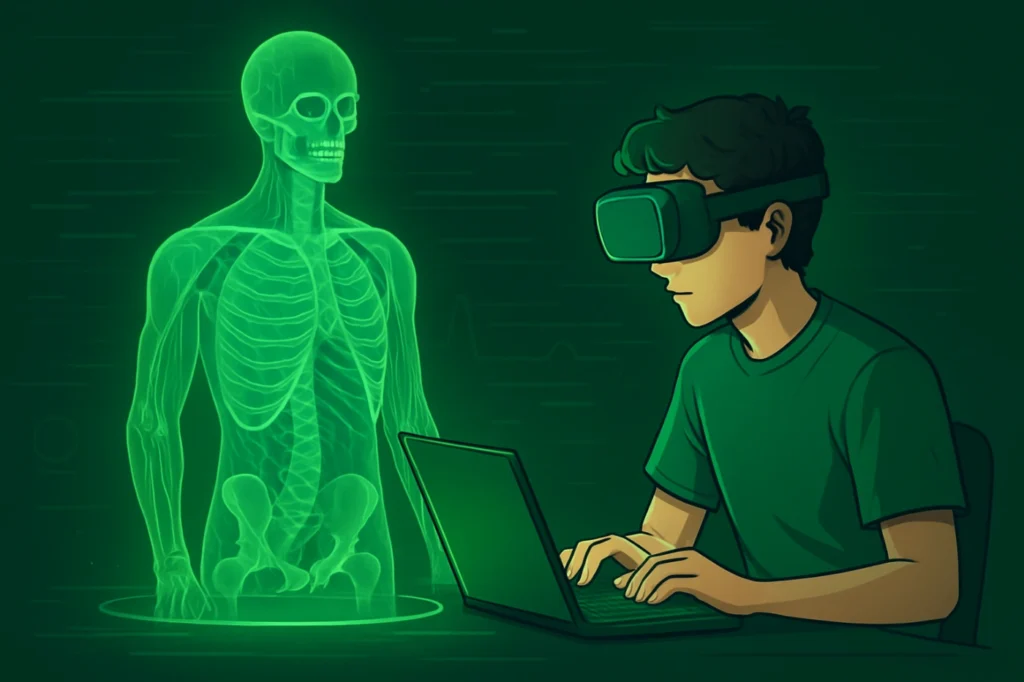
How VR Transforms Anatomy Learning for Students
Virtual reality (VR) is revolutionizing education, particularly in the field of anatomy. It offers a dynamic and immersive learning experience that surpasses traditional methods. This document explores how VR transforms anatomy learning for students, focusing on interactive 3D models, enhanced

Innovative Technologies Shaping the Future of School Science Labs
Artificial Intelligence, more commonly called AI, is revolutionizing data processing and experimentation across several disciplines, including education. Integrating AI into these sectors is not just a fad but a revolution that will revolutionize those sectors by making workflow more innovative
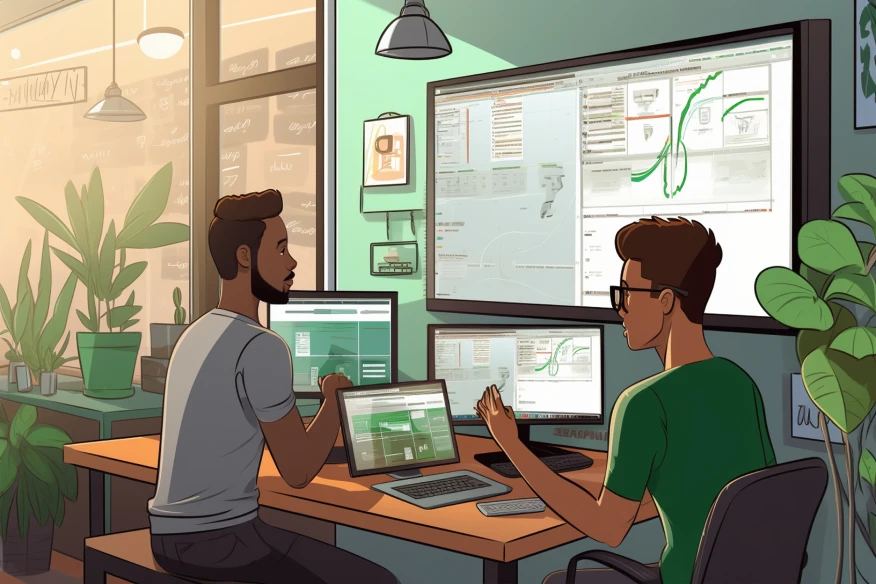
Analysis of Practical Tech Creation and Makerspaces
It is for this reason that in the current society, hands-on learning, especially in the use of technology, is critical in education. With practical assignments as their focus, makerspaces change how learners approach STEM topics. That is why students have